


Star Hunter-Infinite Lagrange
3.72.95K Reviews
App Specs
- Version
- 1.2.1263729
- Updated On
- License
- Free
- Downloads
- 1,000,000+
- Developer
- Exptional Global
- Categories
- Strategy
- Platform
- Android
Screenshots
 Analysis by AppCompare
I approached Infinite Lagrange as a strategy game for players who enjoy thinking beyond a single battle. Its appeal is less about quick action and more about building a presence in space, making choices about a fleet, and seeing how those choices play out over time. If you like the idea of a large science-fiction setting but want a game with systems to manage as well as ships to admire, it has a clear draw.
A strategy game built around a longer horizon
Infinite Lagrange-Star Hunter is a free strategy game from Exptional Global, and its central pleasure is planning rather than reflexes. The official summary points toward fleets and star hunting, but what matters in practice is the broader loop: developing your position, deciding how to use your ships, and responding as the space around you changes. That makes it a better fit for someone who enjoys gradual progress than for someone looking for a self-contained action campaign.
The game’s current version is 1.2.1047300, while its original release was on June 2, 2021. Those facts place it as an established live game rather than a brand-new experiment, but they do not by themselves tell me what changed between releases. I would treat the version number as a useful reference when checking compatibility or discussing the game with other players, not as proof that any particular feature was added or improved.
It has a 3.8 average from around 67,000 ratings, with roughly 2,900 written reviews and over 1 million installs. That mix suggests a sizeable audience alongside a range of opinions. I would not read the average as a verdict on whether the game is right for you: long-form strategy can be absorbing for one player and feel like too much upkeep to another.
How to make the early hours work for you
When I start a strategy game with several connected systems, I try not to treat every available option as equally urgent. I focus first on understanding the basic flow: what advances my position, what consumes resources, and which actions can wait. That approach is especially useful here, because the satisfaction comes from making a plan and then learning from its consequences, not from tapping through every menu as soon as it appears.
A practical habit is to decide what you want from a play session before opening the game. If you have only a few minutes, check your current priorities and take care of one useful task rather than trying to push every part of your empire forward. If you have a longer stretch, use it to think through fleet choices and the next steps in your broader plan. This keeps the game from turning into a string of disconnected chores.
It is also worth separating immediate needs from attractive upgrades. A new ship or improvement may look exciting, but the better choice depends on what your current position actually lacks. I get more value from asking, “What problem will this solve?” than from picking the flashiest option. That small pause can help prevent resources from being spent on something that does not support the way I want to play.
Worth Reading Before You Choose

EA SPORTS FC Mobile 26 Is a Bigger Football Game, but It Takes Time

Flipboard Shows What News Apps Must Do Beyond the Feed

Switching to Android Auto Means Rethinking Your Driving Routine

Google Calendar Makes a Crowded Week Easier to Manage

Ludo King Makes the Most of the Minutes Between Plans

Baby Panda World Brings Quick Play to Modern Phones, but Its Game Library Feels Busy
Where the social side can help—and complicate things
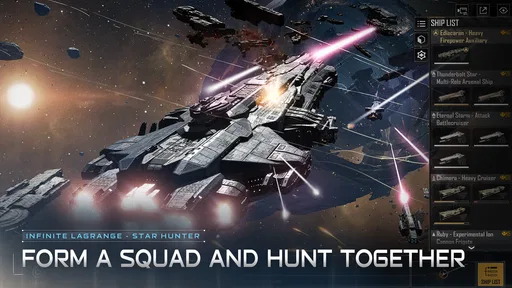
Alliances and shared goals can give a large strategy game a sense of scale that solo play cannot match. They offer a reason to coordinate and make the world feel inhabited by people pursuing their own plans. For a player who likes exchanging advice or working toward a common objective, that social layer can be a major part of the appeal rather than a side feature.
There is a trade-off, though: social play asks for attention beyond the game’s own systems. A group may have expectations about participation, timing, or communication, and those expectations will not suit everyone. I would look for a community whose pace matches my own instead of joining the most demanding group available. A relaxed player should not feel obliged to turn a hobby into a schedule.
For a newcomer, asking experienced players focused questions can be more useful than trying to absorb everything at once. Rather than asking for a complete guide, I would ask what to prioritize at my current stage or how to avoid a common resource mistake. Specific questions tend to produce practical answers and leave room to make your own decisions.
Choosing it over a quicker strategy game
Compared with the usual mobile strategy alternatives, this is most appealing when you want a persistent space setting and enjoy connecting fleet decisions to longer-term development. A compact tactics game is a better choice if you want each session to start and finish cleanly. A puzzle-focused strategy game is better if you prefer solving a fixed challenge without managing an ongoing position. The difference is not simply theme; it is how much you want the game to occupy your attention between individual moments of play.
That distinction also helps answer whether it works well in short bursts. You can use a brief visit to check your direction and handle a small task, but the larger strategic satisfaction comes from following through on plans over time. I would not choose it as my main game if I only want a quick match while waiting in line. It makes more sense if I enjoy returning to an evolving project and can accept that some decisions take patience to evaluate.
The game is rated Teen and requires Android 5.0 or later. It is free to start, with in-app purchases ranging from $0.99 to $99.99 per item. That wide range is a reason to be deliberate, not a reason to assume spending is required or that every purchase offers the same value. I would begin without buying anything, learn which parts of the game I genuinely enjoy, and set a personal spending limit before considering optional items.
What the presentation does for the experience
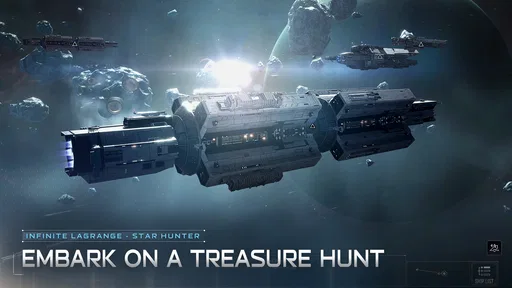
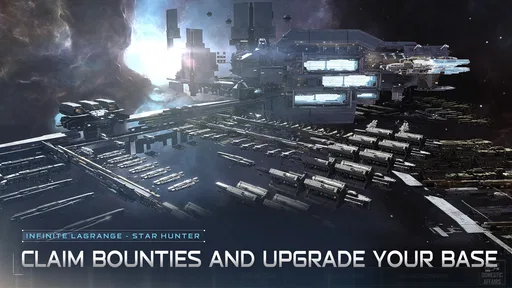
The space setting gives the strategy a strong visual identity. Ships and distant surroundings help make the scale of the game easier to feel, and that atmosphere is a welcome counterweight to menus and planning. I enjoy a game more when its setting makes routine decisions feel like part of a larger world, and this one has the science-fiction framing to support that feeling.
At the same time, presentation should not be mistaken for a substitute for clear priorities. If you are new to this style of game, the most useful question is not whether a ship looks impressive, but how it fits into the choices you are making. I recommend taking time to learn the purpose of the options you encounter instead of judging progress only by how much new content appears on screen.
Because this is a strategy experience, the most rewarding moments are often quieter than a dramatic battle scene: recognizing that an earlier decision has paid off, adjusting after a plan falls short, or coordinating successfully with other players. If you mainly want constant spectacle, the slower stretches may feel like downtime. If you enjoy watching a plan develop, those stretches are part of the pleasure.
First Impressions and Getting Started
When you first launch Infinite Lagrange-Star Hunter, you're greeted with stunning graphics and a user-friendly interface. It’s like stepping into a sci-fi movie, and I was immediately hooked. The game starts with a quick tutorial, which I found super helpful. It guides you through the basics of constructing your space station and assembling your fleet. Trust me, even if you’re a newbie to space games, you’ll find your way around in no time.
The Gameplay Experience
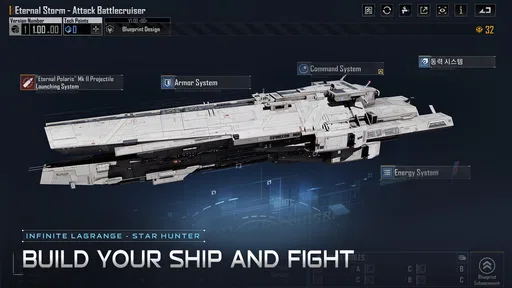
The gameplay is where Infinite Lagrange truly shines. You get to explore uncharted territories, establish space routes, and engage in epic battles. The game offers a diverse range of missions and challenges, keeping things fresh and exciting. I love how you can customize your fleet with different ships and upgrades. There’s something incredibly satisfying about strategizing and seeing your plans come to fruition.
Another aspect that stands out is the social component. You can team up with players from all over the world, forming alliances and taking on massive challenges together. It adds a layer of camaraderie and competition that I didn’t expect but thoroughly enjoyed.
Graphics and Sound Design
The visual aspect of Infinite Lagrange is nothing short of breathtaking. The developers have done an outstanding job in creating a realistic and immersive space environment. The attention to detail is impressive, from the intricate design of the ships to the vastness of the galaxies you explore.
The sound design complements the visuals perfectly. The background music is atmospheric, enhancing the overall experience without being intrusive. Whether you’re in the middle of a space battle or quietly exploring, the soundscapes add depth to every moment.
Challenges and Rewards
One of the things I appreciate most about Infinite Lagrange is the balance between challenge and reward. The game is designed to test your strategic thinking and adaptability. As you progress, the missions become more complex, requiring you to think on your feet and adapt your strategies.
Rewards come in the form of resources, upgrades, and new ships. There’s always a sense of progression, which keeps the motivation levels high. Plus, the game offers daily quests and events, ensuring there’s always something new to look forward to.
The Community Aspect
Infinite Lagrange boasts a vibrant community of players who are always ready to lend a hand or challenge you to a duel. The in-game chat and forums are active, making it easy to connect with fellow space enthusiasts. It’s like being part of a global club where everyone shares a love for exploration and adventure.
Participating in community events and alliances adds a social dimension that I didn’t expect but quickly grew to love. There’s something special about collaborating with players from different parts of the world to achieve a common goal.
Final Thoughts
In conclusion, Infinite Lagrange-Star Hunter is a stellar app that offers a rich and immersive space exploration experience. From its captivating graphics and sound design to the engaging gameplay and community features, it’s a game that keeps you coming back for more.
If you’re a fan of strategy games or just have a fascination with space, this app is definitely worth checking out. Just a heads-up—once you dive into this universe, you might find it hard to leave!
Pros
- Stunning graphics enhance gameplay experience.
- Diverse fleet customization options available.
- Engaging storyline keeps players invested.
- Frequent updates with new content and events.
- Multiplayer alliances foster community involvement.
Cons
- Requires a stable internet connection.
- In-app purchases can be pricey.
- Learning curve for new players.
- High battery consumption on mobile devices.
- Limited offline gameplay options.
FAQs for Star Hunter-Infinite Lagrange
What is Infinite Lagrange-Star Hunter about?
Infinite Lagrange-Star Hunter is a strategy game set in a vast, open universe. Players explore galaxies, build massive fleets, and engage in epic space battles. The game offers a mix of combat, exploration, and resource management, allowing you to customize your fleet and expand your territory.
How do I start building my fleet in Infinite Lagrange-Star Hunter?
To start building your fleet, you'll first need to gather resources by exploring the universe. As you progress, you can construct and upgrade various types of ships. Each ship can be customized with different weapons and modules, allowing you to tailor your fleet to your strategic preferences.
Is Infinite Lagrange-Star Hunter free to play?
Yes, Infinite Lagrange-Star Hunter is free to download and play. However, it does offer in-app purchases that can enhance gameplay. These purchases can speed up progress or unlock additional features, but they are not necessary to enjoy the game fully.
What kind of multiplayer options are available in Infinite Lagrange-Star Hunter?
Infinite Lagrange-Star Hunter features robust multiplayer options. Players can form alliances to tackle challenges together or compete against each other in strategic battles. The game encourages cooperative play and strategic planning, offering a dynamic and engaging multiplayer experience.
What are the system requirements for Infinite Lagrange-Star Hunter?
For Android, Infinite Lagrange-Star Hunter requires at least Android 6.0 or higher. For iOS, it requires iOS 10.0 or later. The game is optimized for both phones and tablets, but a stable internet connection is required for the best experience. Ensure your device meets these requirements to enjoy smooth gameplay.


